


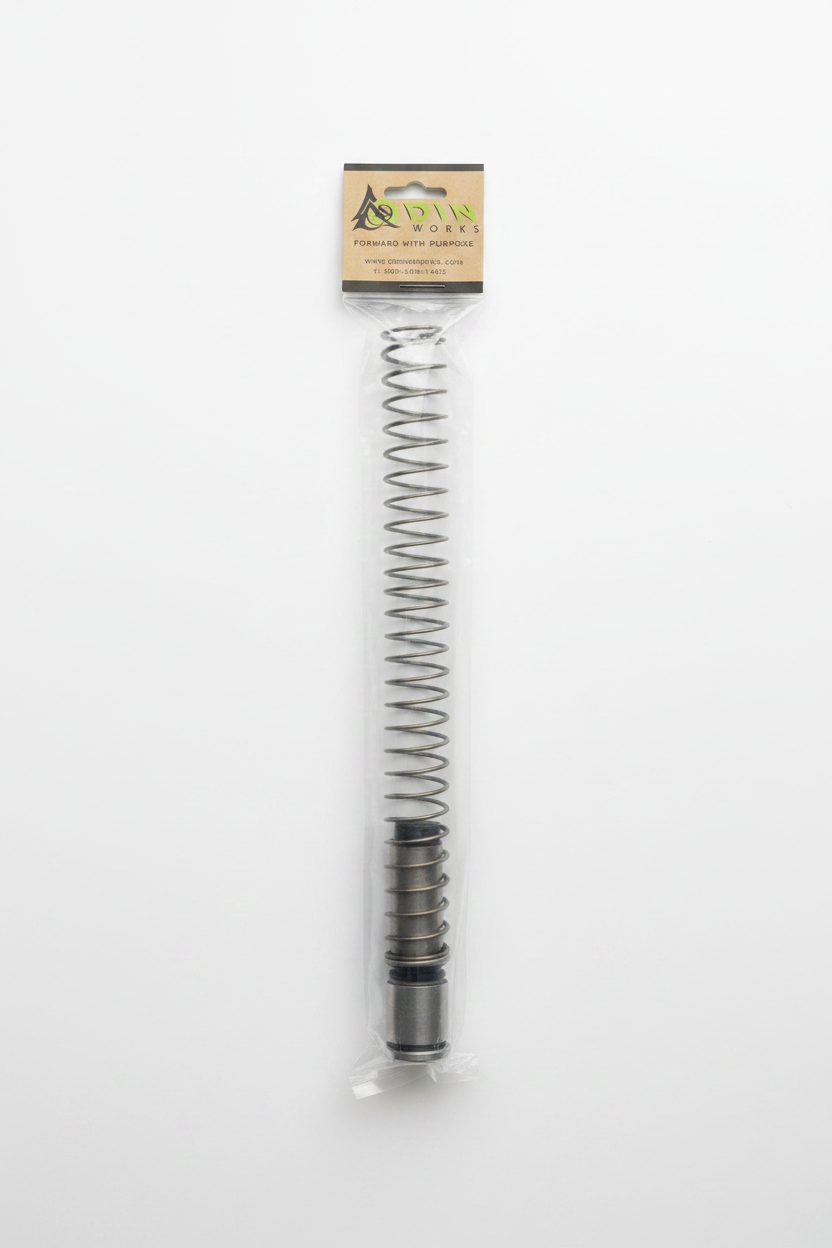
Every FRT and Super Safety build has the same requirement — you need a heavy buffer. H2 minimum, H3 recommended. Sourcing the right buffer, then finding a tube that’s actually matched to it, has always meant piecing together components from multiple places. The Odin Works HFRT ends that. This is an all-in-one buffer and buffer tube system engineered specifically for forced reset trigger and Super Safety builds — correct weight, correct tube, one product, under $100. Made by Odin Works in Southern Idaho. 100% USA.
The HFRT is not a standard buffer repackaged for FRT use. The buffer weight, tube geometry, and spring rate are engineered together as one system calibrated for the specific cycling demands of forced reset triggers and Super Safeties. Install it and run — no weight guessing, no compatibility questions.
Overview
- ✓All-in-one system — buffer and buffer tube engineered together, not two parts from different sources
- ✓Purpose-built for FRTs and Super Safeties — replaces the need for any separate heavy buffer on any forced reset build
- ✓Correct buffer weight built in — engineered around H2–H3 range for FRT reset timing. No guesswork.
- ✓Compatible with all FRTs and Super Safeties — Disruptor, LAT, ARC-Fire V2, Hoffman Super Safety, and any mil-spec AR-15 forced reset system
- ✓100% USA made — Odin Works, Southern Idaho
- ✓Drop-in install — installs like any standard buffer and tube. No special tools, no modification.
- ✓AR-15 mil-spec platform — compatible with all standard mil-spec lower receivers
A standard carbine buffer (~3 oz) cycles too fast for any FRT or Super Safety to reset reliably. The bolt carrier returns to battery before the forced reset mechanism has time to engage. Result: failures to reset, short-stroke symptoms, and inconsistent cycling — all blamed on the trigger when the buffer is the actual problem. H2 (4.6 oz) is the minimum. H3 (5.4 oz) is the recommended sweet spot for carbine-length builds. The HFRT is built around this range — it’s the correct weight from day one, matched to a tube engineered to handle FRT cycling loads.
Frequently Asked Questions